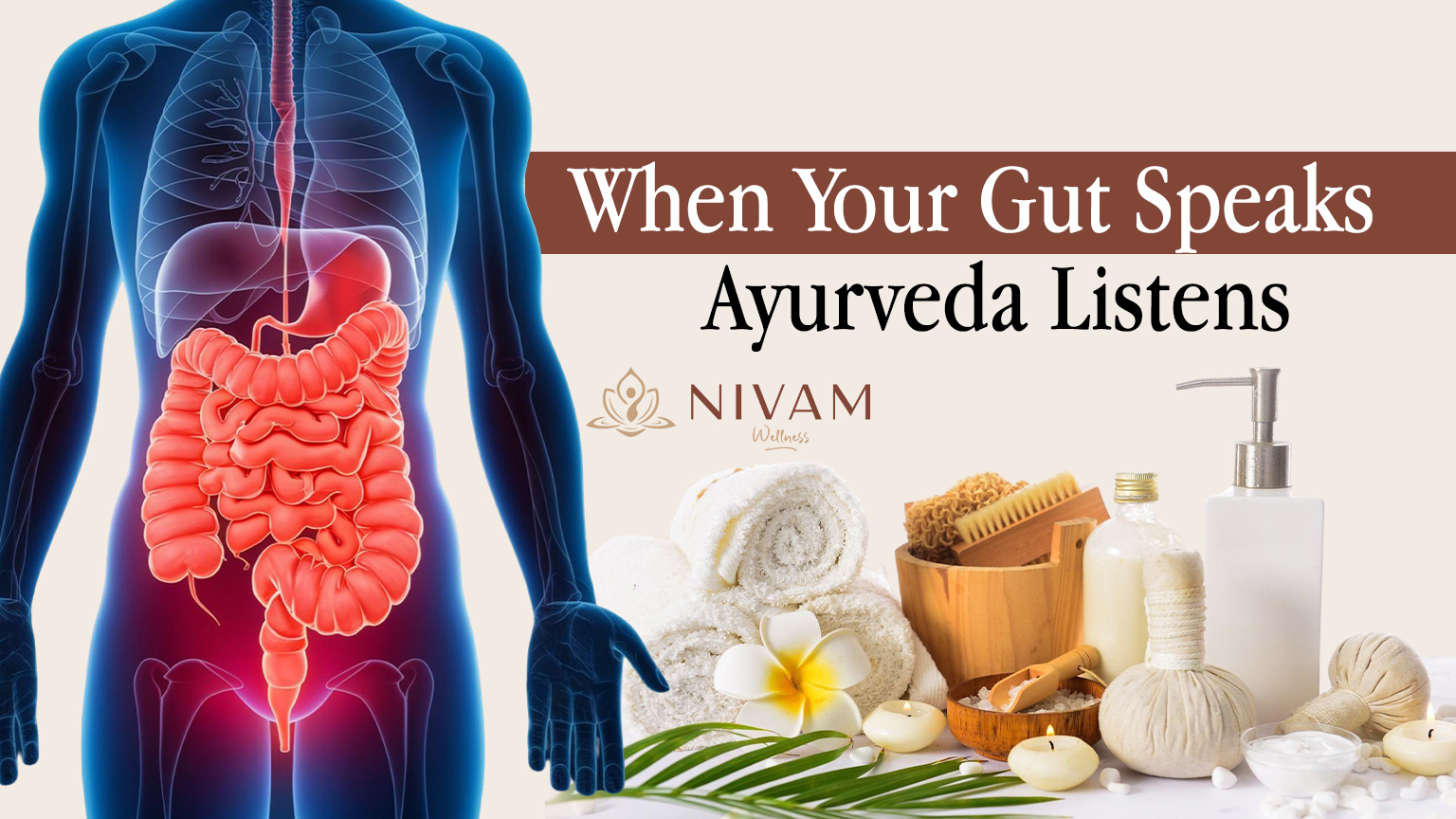
Heartburn after dinner. Bloating that turns your jeans into a struggle. The two o’clock energy crash. A stomach that never seems quite settled. If this sounds familiar, your gut is trying to tell you something — and ayurvedic treatment for gut health is built to listen. At Nivam Wellness in Gachibowli, Hyderabad, we help patients decode those digestive signals and restore balance from the root, not with endless antacids, but with a 5,000-year-old science that treats digestion as the cornerstone of every kind of health.
Your Gut Is the Foundation of Health in Ayurveda
Modern medicine is only now catching up to what Ayurveda has always said: the gut is the centre of your overall wellbeing. Research on the gut-brain axis, the microbiome, and leaky gut has confirmed that digestive health influences mood, immunity, skin, hormones, and even chronic disease risk.Ayurveda puts it simply. If your digestion is strong, you build good tissues, clear energy, and calm emotions. If your digestion is weak, you build toxins, fatigue, and eventually disease. Every classical ayurvedic treatment starts by asking one question before anything else: how is your digestion today?
What Ayurveda Means by Agni (Digestive Fire)
Agni is the ayurvedic term for your digestive fire — the biological capacity to transform food into nourishment. Think of it as the flame that cooks every meal you eat. When Agni is balanced, digestion feels effortless. When Agni is disturbed, even healthy foods create gas, heaviness, or discomfort.
The Four Types of Agni and What They Mean for You
Sama Agni is balanced digestion — the gold standard most of us rarely maintain. Vishama Agni is irregular (driven by Vata), causing bloating, gas, and constipation. Tikshna Agni is overactive (driven by Pitta), creating acidity, heartburn, and loose stools. Manda Agni is sluggish (driven by Kapha), producing heaviness, slow digestion, and weight gain. Your Vaidya identifies your Agni pattern in the very first visit.
What Ayurveda Means by Agni (Digestive Fire)
Agni is the ayurvedic term for your digestive fire — the biological capacity to transform food into nourishment. Think of it as the flame that cooks every meal you eat. When Agni is balanced, digestion feels effortless. When Agni is disturbed, even healthy foods create gas, heaviness, or discomfort.
The Four Types of Agni and What They Mean for You
Sama Agni is balanced digestion — the gold standard most of us rarely maintain. Vishama Agni is irregular (driven by Vata), causing bloating, gas, and constipation. Tikshna Agni is overactive (driven by Pitta), creating acidity, heartburn, and loose stools. Manda Agni is sluggish (driven by Kapha), producing heaviness, slow digestion, and weight gain. Your Vaidya identifies your Agni pattern in the very first visit.
Ama — The Hidden Cause of Modern Gut Problems
When Agni is weak, food is not digested fully. The undigested residue becomes a sticky, toxic substance called Ama. Ayurveda considers Ama the single biggest driver of modern chronic disease. A coated tongue in the morning, bad breath, heaviness after meals, and persistent fatigue are classic signs of accumulating Ama.Popping antacids or fibre supplements does not clear Ama. It has to be dissolved and removed through structured ayurvedic detoxification, which is exactly what Panchakarma and classical herbal protocols are designed to do.
Ama — The Hidden Cause of Modern Gut Problems
When Agni is weak, food is not digested fully. The undigested residue becomes a sticky, toxic substance called Ama. Ayurveda considers Ama the single biggest driver of modern chronic disease. A coated tongue in the morning, bad breath, heaviness after meals, and persistent fatigue are classic signs of accumulating Ama.
Popping antacids or fibre supplements does not clear Ama. It has to be dissolved and removed through structured ayurvedic detoxification, which is exactly what Panchakarma and classical herbal protocols are designed to do.
Common Gut Issues Treated with Ayurveda
At our ayurvedic clinic in Gachibowli, these are the digestive complaints we see most often — each one clearly mapped to a classical ayurvedic condition.
Acidity and Heartburn (Amlapitta)
Burning in the chest, sour burps, and late-night heartburn point to aggravated Pitta. Ayurveda cools the digestive tract with herbs like Avipattikar churna and Shatavari, corrects meal timing, and removes trigger foods. Most patients feel real relief within two to three weeks without dependence on PPIs.
Bloating and Gas (Adhmana)
Tight, distended abdomen after meals usually signals Vata-driven Vishama Agni. We prescribe carminative herbs such as Hingvastak churna and Ajwain, warm cooked foods, and abdominal oil massage. Simple fixes like sipping warm ginger water before meals often transform how patients feel within days.
Chronic Constipation (Vibandha)
Irregular, hard, or incomplete bowel movements reflect dry Vata in the colon. Triphala at bedtime, castor oil therapy, adequate warm hydration, and medicated enemas (Basti) form the backbone of treatment. For chronic cases, a short Basti course produces results that laxatives cannot sustain.
IBS and Grahani
Irritable bowel syndrome maps closely to the classical condition Grahani, where the small intestine loses its ability to absorb nutrients. Ayurveda rebuilds the gut lining with Kutaja, Musta, and Bilva formulations, paired with a rice-and-buttermilk-based healing diet. Patients who have struggled for years with IBS often see lasting improvement.
Leaky Gut and Food Intolerances
Emerging research on intestinal permeability echoes ayurvedic thinking on Ama and weak Agni. Our protocols repair the gut barrier with ghee-based formulations, kitchari cleanses, and targeted Panchakarma. This is where modern functional medicine and classical Ayurveda speak almost the same language.
Core Ayurvedic Therapies for Gut Healing
Beyond herbs and diet, ayurvedic treatment for gut health draws on Panchakarma — classical cleansing therapies that reset digestion at a deep level.
Deepana and Pachana (Kindling the Fire)
Before any detox, we strengthen Agni and digest existing Ama. Herbs like Trikatu, Chitraka, and Musta gently kindle the digestive fire and prepare the body for deeper therapies. This preparatory phase is often where patients already start feeling lighter and clearer.
Virechana (Therapeutic Purgation)
Virechana uses medicated purgatives to clear Pitta and Ama from the liver, small intestine, and blood. It is highly effective for chronic acidity, IBS, hyperacidity with skin eruptions, and food-related inflammation. Learn more about Virechana at Nivam Wellness.
Basti (Medicated Enema)
Basti is the signature therapy for Vata disorders, including constipation and IBS. Medicated oil and herbal decoction enemas are administered in a structured protocol, calming the colon and nourishing the gut lining at the same time. Basti is often described as the most powerful of all Panchakarma procedures.
Abhyangam and the Gut-Brain Axis
Chronic digestive issues are rarely purely physical. Abhyangam (medicated oil massage) and Shirodhara calm the nervous system, which directly relaxes the enteric nervous system — your gut’s second brain. This is why patients consistently report better digestion after stress-relief therapies, even when the therapy did not target the abdomen directly.
Gut-Healing Herbs from the Ayurvedic Pharmacy
A handful of classical herbs form the backbone of most gut protocols at Nivam:
- Triphala: Three-fruit blend that regulates bowels, gently detoxifies, and supports the gut lining.
- Jeera (cumin): Warming, carminative, and ideal for bloating and slow digestion.
- Ajwain: Powerful for gas, indigestion, and stubborn IBS-type discomfort.
- Hingvastak churna: Traditional blend for bloating, belching, and post-meal heaviness.
- Amla: Cooling, rich in vitamin C, and one of the best herbs for Pitta-type acidity.
- Licorice (Yashtimadhu): Soothes ulcers, acid reflux, and inflamed gut lining.
Your Vaidya selects the right combination based on your Agni type, dosha imbalance, and current symptoms, rather than offering a one-size-fits-all product.
Daily Habits That Strengthen Your Digestive Fire
Therapies work faster when paired with simple, consistent daily habits:
- Eat your largest meal at lunch, when Agni is naturally strongest — not at 10 pm.
- Sip warm water through the day instead of cold or iced drinks, which dampen Agni.
- Chew each bite thoroughly and eat without screens; digestion begins in the mouth and mind.
- Finish dinner by 8 pm and go to bed by 10:30 pm to support overnight gut repair.
- Walk 100 steps after each meal — called Shatapavali — to aid digestion naturally.
What to Expect at Nivam Wellness, Gachibowli Hyderabad
A typical gut health journey at Nivam begins with a 45-minute consultation covering diet, sleep, stress, and symptom history. Our physician performs pulse diagnosis (Nadi Pariksha) and Agni assessment, then prepares a written plan combining herbs, diet guidance, and appropriate Panchakarma therapies.
We are located in Gachibowli, easily accessible from Kondapur, Madhapur, Financial District, and HITEC City, with sessions available seven days a week from 9 am to 10 pm.
Frequently Asked Questions
How long does ayurvedic treatment for gut health take?
Simple issues like acidity or mild bloating often improve within two to four weeks. Chronic conditions such as IBS, long-standing constipation, or Grahani typically need two to three months of structured treatment, including at least one round of Panchakarma for lasting results.
Is ayurvedic treatment safe for chronic acidity and GERD?
Yes. Classical herbs like Avipattikar churna, Amla, and Shatavari cool and heal the digestive tract without the long-term risks of PPIs. We coordinate with your current prescriptions and taper supportive medicines gradually as your symptoms settle.
Can Ayurveda cure IBS permanently?
IBS is chronic, but Ayurveda often produces long remission by rebuilding Agni and repairing the gut lining. Most patients at Nivam achieve significant, lasting symptom reduction when they stay consistent with diet, herbs, and follow-up Panchakarma cycles.
What foods should I avoid for better gut health?
During active treatment, avoid cold drinks, leftovers, excess dairy, fermented foods, refined sugar, and incompatible food combinations (Viruddha Ahara). Warm, freshly cooked meals with simple spices are ideal. Your Vaidya will share a personalised food list.
Do I need Panchakarma for gut health, or are herbs enough?
Mild issues often resolve with herbs and diet alone. For chronic, long-standing gut problems — especially IBS, Grahani, or persistent acidity — a structured Panchakarma round, typically Virechana or Basti, is usually essential for lasting healing.
Is there an ayurvedic clinic for gut health near HITEC City?
Yes. Nivam Ayurvedic Wellness is located in Gachibowli, minutes from HITEC City, Kondapur, and Madhapur. Consultations and Panchakarma packages can be booked by calling +91 87122 68111 or via nivamwellness.com.
A Final Thought
Your gut talks every day — in heaviness, heat, bloating, or fatigue. Modern fixes silence the noise, but ayurvedic treatment for gut health asks what the message really means. It heals Agni, clears Ama, and rebuilds digestion from the ground up. Our team at Nivam Wellness, Gachibowli, would be honoured to help you listen.